

You already know you should be moving more. That’s not the problem. The problem is the gap between knowing and doing, and it’s wider than it used to be.
Maybe you had a routine once. Tennis on Saturdays. Laps at the pool. Evening walks with your spouse. But routines depend on structure, and structure has a way of falling apart. The doubles partner moved. The pool schedule conflicts with three different doctor appointments. The evening walk lost its appeal when the sidewalks started feeling less certain underfoot.
What replaces that structure? For most people, the answer is good intentions and not much else. A yoga mat still rolled up in the closet. A gym membership that costs forty dollars a month to feel out of place. YouTube videos designed for someone twenty years younger, with no guidance on how to modify when your knee says stop.
The real issue isn’t motivation. It’s that the system you once relied on to stay active no longer exists, and building a new one from scratch, alone, while managing everything else your day demands, is a project most people quietly abandon.
That’s a difference worth remembering, because what follows are four types of movement with strong evidence behind them. Not a lecture on trying harder. A look at what works, why it works at this stage of life, and what makes the difference between a routine that sticks and one that doesn’t.
Tai Chi: The Exercise That Earns Its Reputation
Tai chi gets recommended so often for people over 75 that it risks sounding like a cliché. It’s not. The research behind it is unusually strong.
A 2018 randomized clinical trial published in JAMA Internal Medicine compared a therapeutic tai chi program to both multimodal exercise and stretching in older adults at high fall risk. Tai chi outperformed both. A 2023 meta-analysis reviewing 24 randomized controlled trials found that tai chi reduced the risk of falls by 24%, and that the benefit increased with practice frequency. Yang-style tai chi showed the strongest results.
What makes tai chi effective at this age is the specific demands it places on the body. The slow, controlled weight shifts train proprioception, your body’s ability to sense where it is in space. That’s the system that erodes with age and contributes most directly to falls. Tai chi also requires continuous micro-adjustments in balance, building the kind of stability that prevents the stumble from becoming the fall.
Beyond balance, research from UCLA psychiatrist Dr. Helen Lavretsky suggests tai chi may help regulate the body’s stress response. Her work has shown that tai chi practiced alongside standard treatment improved depression remission and cognitive functioning in older adults. The mechanism appears related to how the slow, controlled breathing activates the parasympathetic nervous system, slowing heart rate and lowering blood pressure.
There’s one more finding worth noting. The 2020 Journal of Aging and Physical Activity review found that 71 to 81% of older adults who started class-based tai chi programs stuck with them. That’s a remarkably high adherence rate for any exercise program. The reason matters, and we’ll come back to it.
The entry point is low. You don’t need equipment, special clothing, or a baseline level of fitness. You need a qualified instructor who understands how to teach people at your stage, not a generic class that assumes everyone starts in the same place.
Resistance Training: Your Body Can Still Respond
This is where outdated assumptions do the most damage. The belief that strength training after 80 is pointless, or dangerous, has been contradicted by decades of research.
A 2023 study published in the International Journal of Sport Nutrition and Exercise Metabolism directly compared resistance training outcomes in adults aged 65 to 75 with adults aged 85 and older. After twelve weeks, the 85-plus group showed an 11% increase in quadriceps size and a 46% increase in leg extension strength. The gains were statistically indistinguishable from the younger group.
That finding echoes a landmark 1994 study published in the New England Journal of Medicine. Researchers at Hebrew SeniorLife worked with 100 long-term care residents averaging 87 years old and found a 113% average increase in leg strength after high-intensity progressive resistance training, along with improved walking speed and stair-climbing ability. That study has been cited more than 4,000 times and reshaped how the medical community views exercise and aging.
Dr. Andrew Jagim, director of sports medicine research at Mayo Clinic, summarizes the current science plainly: depending on your previous activity levels, you can continue to build muscle into your 80s and beyond.
The key words there are “depending on your previous activity levels,” which is another way of saying that what you do now still shapes what happens next. Your body remains trainable. It responds to progressive challenge. But the programming matters. Resistance training at this stage should start with guidance from someone who understands age-appropriate loading, recovery timelines, and how to work with existing conditions like arthritis or osteoporosis rather than around them.
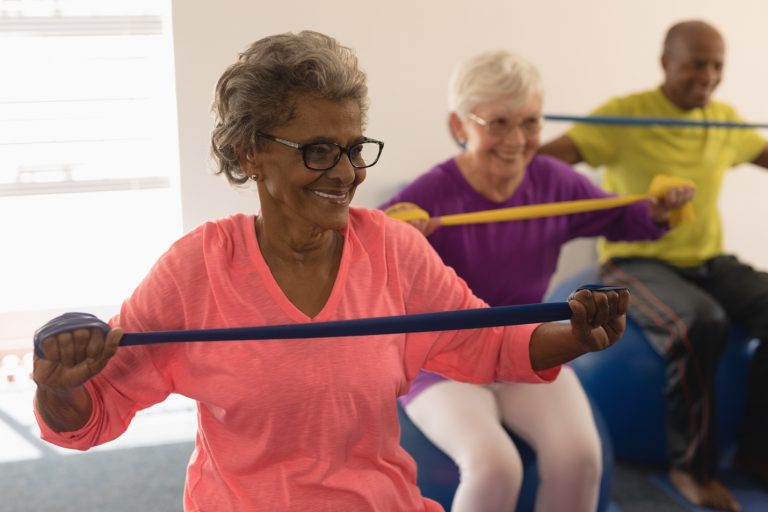
Resistance bands are a reasonable starting point for people returning to strength work after a long gap. They allow controlled, progressive loading without the intimidation of a weight room. But the real variable isn’t the equipment. It’s whether someone qualified is watching your form and adjusting your program as you progress.
Water-Based Exercise: Low Impact, High Return
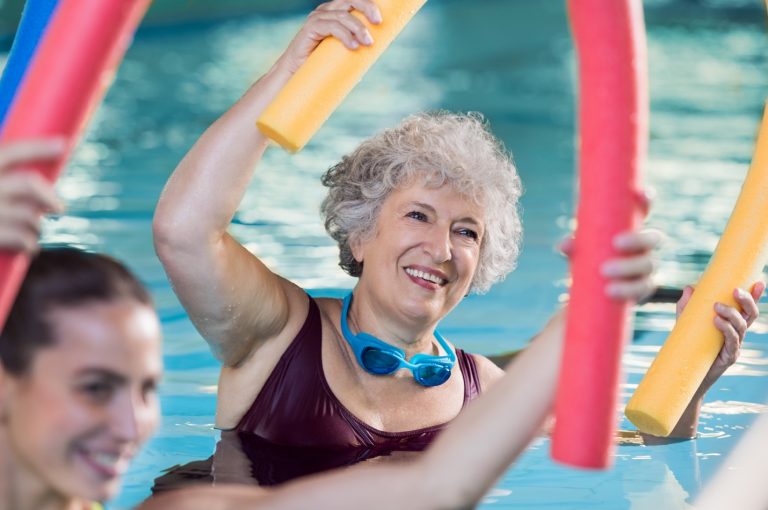
Water provides something no other exercise environment can: buoyancy that reduces joint stress while still requiring muscular effort. For anyone managing arthritis, chronic joint pain, or recovering from surgery, this changes the math on what’s possible.
Aquatic exercise allows movement through a fuller range of motion than land-based alternatives. The water’s resistance builds strength in every direction, not the single plane most machines offer. And the reduced impact on joints means you can work harder and longer without the two-day recovery penalty that discourages people from staying consistent.
The honest caveat: you need a pool, which means you need access. This isn’t a home exercise in any practical sense. It’s worth mentioning because access is part of the equation that determines whether an exercise becomes a habit or stays an aspiration.
Walking: Better Than You Think, But Not for the Reasons You’ve Heard
The standard advice is to aim for 10,000 steps a day. That number comes from a 1960s Japanese marketing campaign for a pedometer, not from clinical research. More recent studies suggest the benefits of walking plateau well below that threshold, particularly for adults over 75.
What the research does support is consistency over volume. A daily walk of moderate length, done regularly, produces measurable benefits for cardiovascular health, mood, and cognitive function. The distance matters less than the habit.
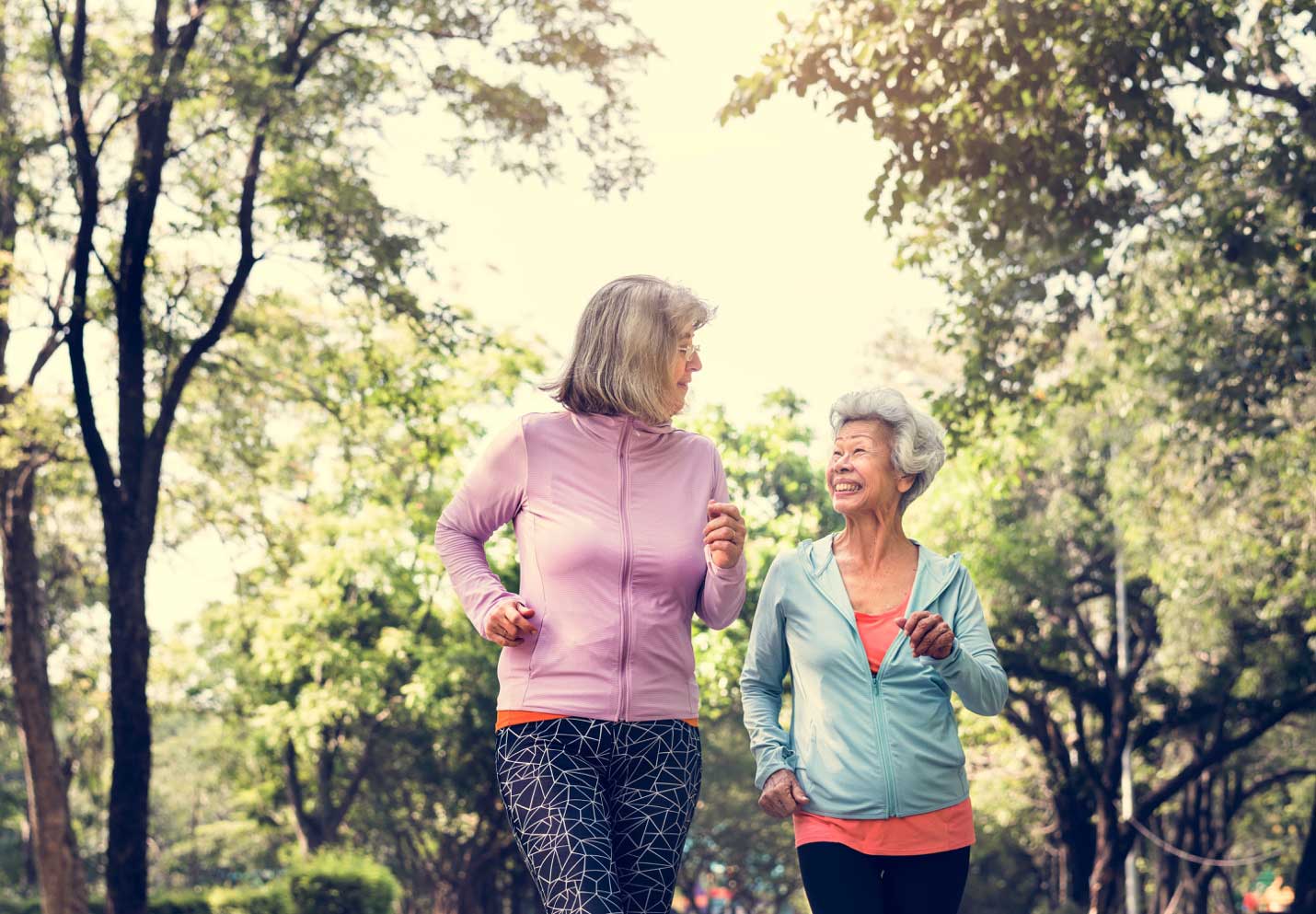
Walking also changes when it becomes social. A walk with a companion is a different activity than a walk alone. It’s conversation, accountability, and a reason to show up even when the couch sounds better. That social layer transforms walking from exercise into something closer to a ritual, and rituals are harder to abandon than routines. If you’re interested in how friendships shape healthy aging, the connection between social bonds and physical activity is one of the strongest threads in the research.
For anyone whose walking confidence has decreased because of balance concerns, uneven sidewalks, or fear of falling, the right response isn’t to stop walking. It’s to change where and how you walk. Level, well-maintained paths. A walking partner. Supportive footwear. Conditions that reduce risk without eliminating the activity.
The Variable Most People Overlook
All four of these movements work. The evidence is clear. But evidence doesn’t explain why most people who know this still aren’t doing it.
The research on exercise adherence points consistently to the same finding: people who exercise in structured group settings maintain their habits at significantly higher rates than people who exercise alone. A systematic review of community-based group exercise programs found long-term adherence rates near 70%. The factors that predicted whether someone stuck with a program weren’t willpower or discipline. They were social connectedness, program design, instructor quality, and perceived benefit.
That’s a meaningful insight for anyone who has tried and stopped, tried and stopped, tried and stopped. The pattern isn’t a character flaw. It’s a design problem. Solo exercise in an environment that competes for your energy and offers no accountability is a system built to fail.
The people who sustain movement over years tend to share a common trait: they’ve arranged their environment so that showing up is easier than not showing up. The exercise is nearby. The people are expecting them. The programming fits their ability. The friction between intention and action has been reduced to almost nothing.
That’s not a small thing. For anyone spending their energy maintaining a home, managing logistics, and trying to fit exercise into whatever time is left over, the environment you’re operating in may be the single biggest factor determining whether these exercises become part of your life or stay bookmarked on your phone.
The body is still trainable. The research confirms it at 80, at 85, and beyond. The question isn’t whether movement will help. It’s whether your daily life is set up to make movement easy enough that you’ll actually do it.
For a broader look at how regular movement connects to longevity and quality of life, this guide on the science of staying active goes deeper.