

Setting Up a Power of Attorney Facts for You & Your Family
Your independence and autonomy are one of life’s greatest treasures, and the idea of that anything could change that can be scary. Setting up a power of attorney (POA) helps protect your independence by ensuring your wishes are honored if you’re ever unable to make decisions for yourself. While planning ahead can feel daunting, it’s a vital step toward providing peace of mind for you and your loved ones. With the right POA, you gain confidence that your future is in trusted hands, regardless of circumstances.
Think of a POA as a trusted teammate—a person who will act on your behalf during challenging times, ensuring your decisions and directions are carried out and your loved ones can focus on supporting you.
Choosing the right power of attorney is an important decision that should reflect your priorities and values. Take your time, gather information and select someone you trust to safeguard your independence and well-being.
Statement of Fairness: Considering senior living options for yourself or a loved one? We’re here to help at every step. And even though we specialize in independent living communities, our goal is for YOU to find your best path to gracious retirement living, and part of how we achieve that is by providing reliable information on all types of senior living, not just the ones we offer. When our offerings serve as useful illustrations to a specific topic, you can find that information in the attached sidebar.
Disclaimer: This content is not intended as financial advice. Remember to review your plans and budgets with a licensed financial professional when making significant financial decisions.
Step 1: Know the Facts Before Setting Up a Power of Attorney
What is a Power of Attorney?
A power of attorney is a legal document that allows another person to act as an agent onyour behalf. This person can be authorized to pay your bills, manage your investments, make health care decisions and more for a limited or extended time.
How Does Power of Attorney Work?
You get to say what this person can do and under what circumstances they’re allowed to do it. If you ever change your mind, you can designate someone else.
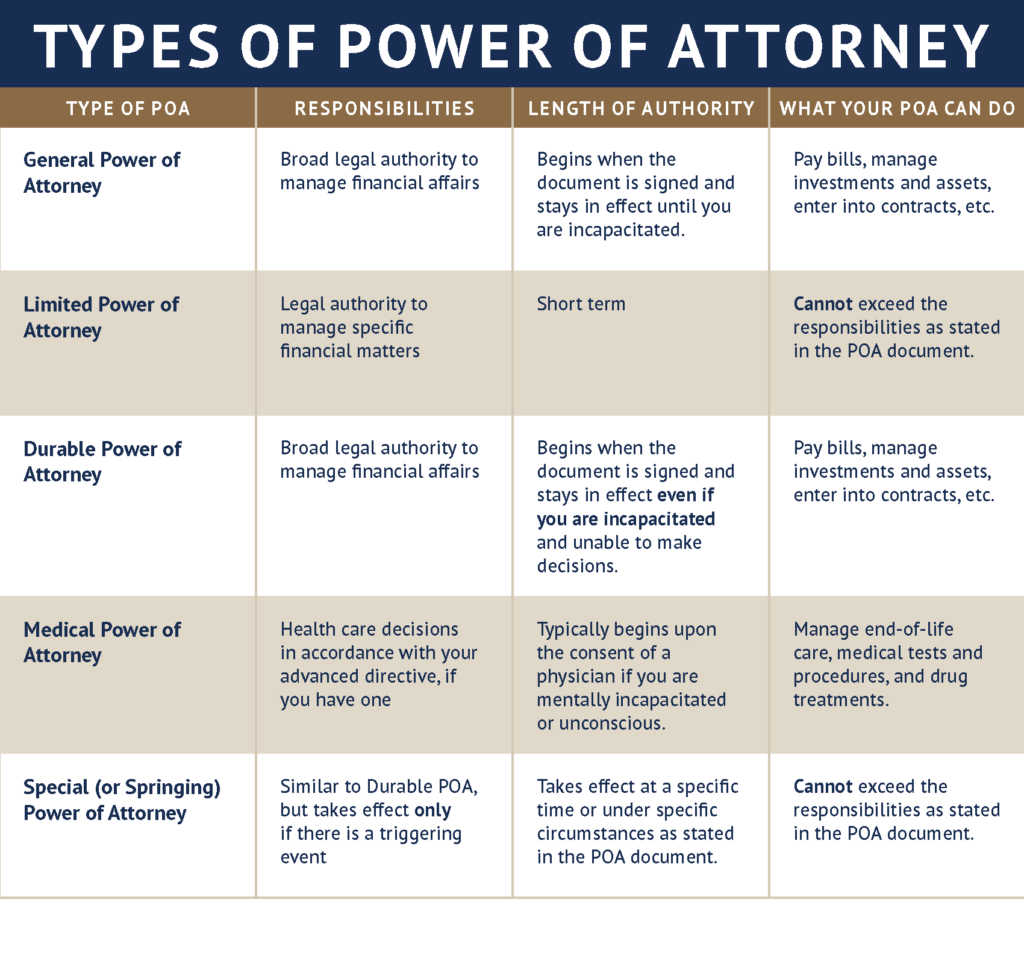
Step 2: Start Setting Up a Power of Attorney
First, Know Your State’s Power of Attorney Laws
Before setting up a POA, it’s essential to have a clear understanding of its function. While POAs are recognized in every state, the specific rules and regulations governing them can vary. This means that the powers your chosen agent can exercise might differ depending on your location.
Choose a Power of Attorney
Decide what’s important to you. You will be asking someone to represent you in medical, legal and financial matters. Ask yourself:
- What religious, spiritual, or moral beliefs guide my life?
- Do I want my house and other assets to stay in the family or not?
- Who can carry out my end-of-life care with a clear conscience?
Find a family member or friend who shares your values and priorities. They can help you better because they understand your feelings and how you would react in various situations. This makes it easier for them to act in your best interest.
Their knowledge of your emotions and reactions allows them to provide more effective assistance. By knowing you well, they can make the choices that are most beneficial for you.
Who is the Right Person for the Job?
Your power of attorney will be making decisions and using your finances before your will takes effect. This person must be honest and someone you trust completely.
In all states, the person you appoint must be over 18 years of age. Most people choose a family member to help make decisions in their best interest. However, you can also pick a friend or someone neutral for this purpose.
6 Things to Look for in a POA
Ideally, the person you choose:
- Lives near you. Managing health care and finances from afar is tricky. In emergencies, traveling consumes crucial time.
- Has medical, financial and/or legal knowledge. If you don’t know anyone like that, can you depend on another person to reliably research issues or ask the advice of a competent professional?
- Possesses common sense. In emotional situations, people are prone to make rash decisions. You’ll want to find somebody with the ability to keep a level head.
- Is a good communicator. Your power of attorney must be able to advocate on your behalf.
- Can make the time to carry out the duties. Your power of attorney will be juggling their personal responsibilities along with yours.
- Stays organized. The more detail-oriented the person is, the better.
Step 3: Communicate Your Decision

The Power of Open Communication
The next crucial step is having open and honest conversations with the person you choose as your POA and with your loved ones. Be open and honest about your hopes, fears and any specific wishes you have for your future care. Using “I” statements can help express your feelings clearly, like: “I feel more secure knowing you’ll be there to handle things if needed.” Remember, clear and concise communication is essential. Here are some tips.
How to Ask Someone to be Your Power of Attorney
Now that you have someone in mind, ask if they’re willing and able to act as your power of attorney. Like all sensitive topics, approach the subject with empathy.
- Explain that you’re planning for your future and are considering what your options are in case you are unable to make decisions for yourself.
- Explain the responsibilities of a power of attorney.
- Ask if they would be able to make financial, legal and/or health care decisions for you in case you are incapacitated.
- Tell this person why you believe they could do the job successfully.
- Reassure them that you will share important information so that if the time ever comes, they’ll know what to do.
- If they agree, show your appreciation. If the person hesitates, ask them if they’re willing to learn more so they can make an informed decision. Offer to revisit the subject later.
- Discuss how others may feel about your choice, and reinforce your reasons.
How to Tell Your Family
Setting up a power of attorney can lead to conflicts and test family dynamics. Old jealousies and resentments can surface and surprise you.
- Schedule a family meeting to discuss your decision and answer questions.
- Explain how setting up a power of attorney is intended to give everyone peace of mind.
- Give the reasons behind your choice of POA.
- Be empathetic. Listen and acknowledge their feelings and concerns without being defensive.
- Remember: No matter what anyone says or how anyone feels, you can listen with empathy without being obligated to change anything about your plans.
- If you’re not sure of what to say or are feeling too emotional, give yourself time to collect your thoughts.
- If the conversation becomes heated, revisit the topic later, when cooler heads prevail.
Need Help Setting Up a Power of Attorney?
You’ve got resources. An estate planner can walk you through the steps of setting up a power of attorney as well as medical advance directives, wills and trusts.
You don’t have to use a lawyer for setting up a power of attorney. Each state has a downloadable power of attorney form complete with instructions. Search online using power of attorney form and your state name as keywords.
Eldercare Locator is a government agency that can connect you to an information specialist.
Step 4: Check Setting Up a Power of Attorney Off Your To-do List
No one likes to think about the possibility of serious illness. Just the thought of it can lead to difficult family conversations. You can help family members deal with their fears and negative emotions through empathy and clear communication.
Having a trusted power of attorney in place gives you control even when you are not able to administer your financial and legal affairs or make your own medical decisions. Your agent plays a crucial role in your estate plan and offers you and your family the security of knowing someone will act on your behalf with your best interests at heart.
DID YOU ENJOY WHAT YOU JUST READ?
Join our exclusive community and subscribe now for the latest news delivered straight to your inbox. By clicking Subscribe, you confirm that you agree to our terms and conditions.
Fun Is in the Forecast at The Savoy

The Savoy in Winter Springs, Florida, offers more than just a home—it’s a vibrant community where independence, connection and peace of mind come together. With our live-in management team, friendly staff and a welcoming community of active residents, you’ll always feel empowered and secure.
Enjoy three chef-prepared meals daily, a calendar filled with engaging activities and a unique resident travel program—all included in one affordable monthly rent.
Enjoy More at Colonial Gardens

Located in the heart of Beverly, Massachusetts, Colonial Gardens offers a warm, welcoming environment where independence meets connection. Here, you’ll enjoy the perfect balance of comfort and independence with all the details taken care of. From chef-prepared meals and engaging activities for every interest to local transportation and housekeeping, we make it easy to focus on what truly matters: living a fulfilling life, your way.
Discover a retirement lifestyle designed for you.
UP NEXT

12 min read
Healthy Boundaries for Seniors: Maintaining Independence with Adult Children
Navigating the delicate balance between supporting independence and inadvertently encroaching on it can be a challenging task for families.
Frequently Asked Questions
Can I change my power of attorney later if my circumstances or relationships change?
Yes, you can change your power of attorney (POA) at any time, as long as you’re considered mentally competent to make the change. If your circumstances evolve or your relationships shift, you can revoke your current POA and create a new one that better reflects your needs. It’s a good idea to review your POA periodically to ensure it still aligns with your wishes and priorities.
What happens if I don’t have a power of attorney in place?
Without a POA, when you are incapacitated and decisions about your medical care, finances, or legal matters must be made, those decisions may default to the court system. In most states, a judge would appoint someone, often referred to as a guardian or conservator, to make these decisions for you. This process can be time-consuming and costly, and the decision may not align with your personal preferences. Setting up a POA ensures that someone you trust will make decisions on your behalf, protecting your independence and giving your loved ones peace of mind.
What resources or professionals can help me set up a power of attorney?
Estate Planners: These legal professionals specialize in helping you create documents like POAs, wills, and advance directives. Several resources can guide you through setting up a POA:- State-Specific Forms: Most states offer downloadable POA forms with instructions. Search online for “power of attorney form” along with your state name to find the appropriate resource.
- Eldercare Locator: This government agency connects you to information specialists who can guide you to local resources. Visit eldercare.acl.gov or call 800-677-1116.
- Legal or Financial Advisors: If you’re unsure where to begin, consult with a trusted legal or financial advisor for personalized advice.
How can a senior living community support me or my family if I have a power of attorney in place?
Senior living communities like can work with your designated POA at your direction to ensure your needs are met and your autonomy is respected. Having a POA in place creates clarity in the relationship between the community and your family, allowing you to focus on living a carefree and fulfilling life.

DID YOU ENJOY WHAT YOU JUST READ?
Join our exclusive community and subscribe now for the latest news delivered straight to your inbox. By clicking Subscribe, you confirm that you agree to our terms and conditions.

Essential Home Safety for Older Adults
Imagine your loved one, comfortable and confident in their own home. They can navigate their living space with ease,...
Read More